HUMANITY FILES
Hiroshima
The first atomic bomb used in war
Hiroshima · 6 August 1945
Summary
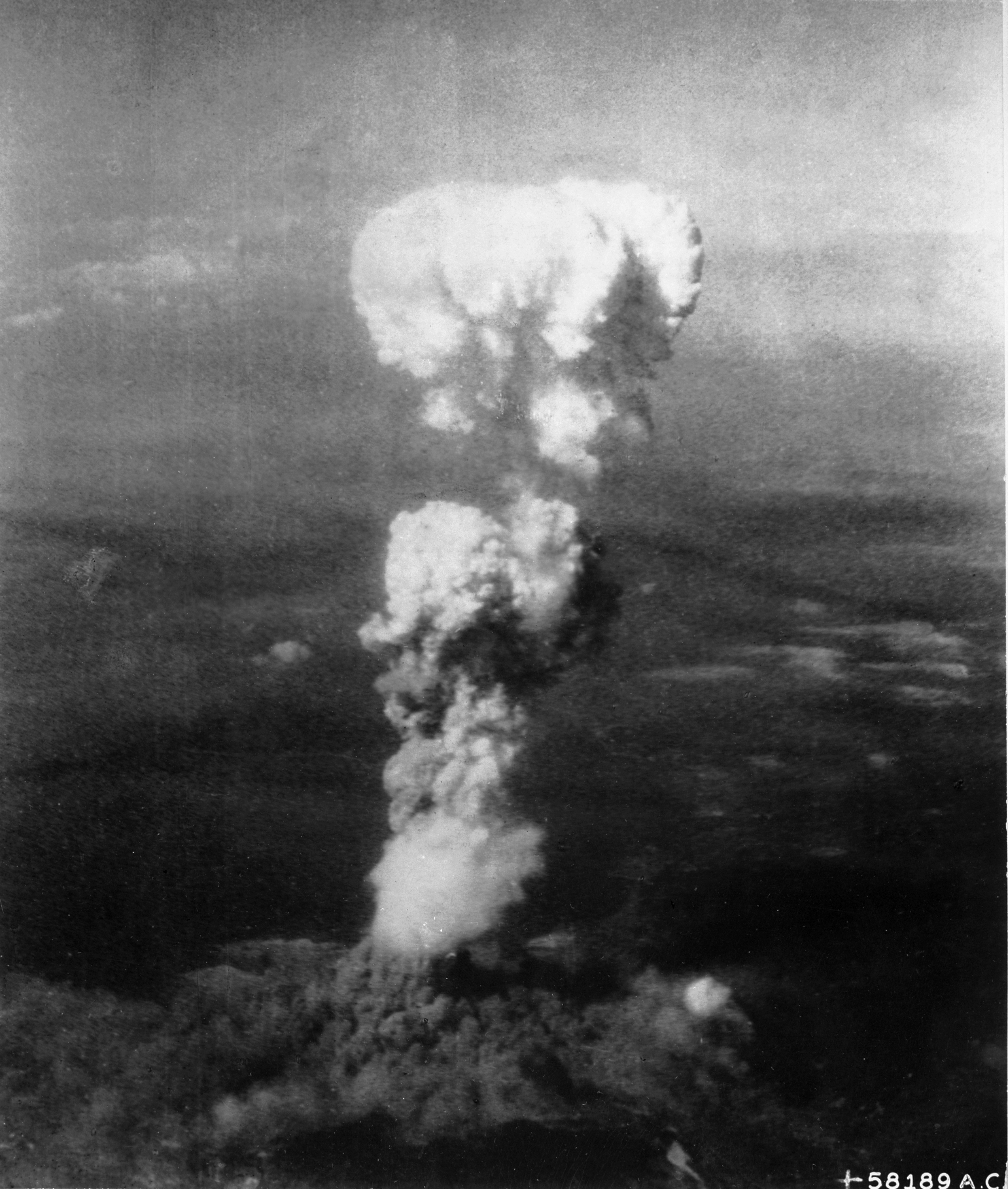
At 8:15 a.m. on 6 August 1945, a U.S. Army Air Forces B-29, Enola Gay, released a uranium-235 atomic bomb nicknamed Little Boy over Hiroshima. The weapon exploded roughly 600 metres above the city. Hiroshima was a military headquarters and logistics centre, but it was also a large city filled with civilians, mobilized students, Korean and other colonial subjects, and some prisoners of war. Hiroshima City estimates that approximately 350,000 people were in the city when the bomb exploded and that about 140,000 people had died by the end of December 1945, while emphasizing that the precise number can never be known. The bomb destroyed much of the built-up city through blast, heat and fire. Ionizing radiation added a form of injury not present in conventional bombing. The basic facts of the bombing are well documented. The central historical controversy is different: how necessary was the atomic bombing to end the Pacific War, and how should its role be weighed against the Soviet Union's entry into the war, Japan's internal political crisis, the continuing blockade and bombing campaign, and the planned Allied invasion? Serious historians disagree. Humanity Files therefore separates the established event from the contested interpretation.
Estimated Impact
Hiroshima City estimates approximately 140,000 deaths by the end of December 1945, with an acknowledged uncertainty of roughly plus or minus 10,000 — not an exact count.
Population records were destroyed in the bombing itself. Wartime movement had made the city's population fluid, military numbers were incomplete, and forced laborers and people temporarily present were difficult to count. Some victims died immediately and left no recoverable remains; others died later from burns, trauma or radiation effects, and cutoff dates vary across sources.
Before the Event
By summer 1945, Imperial Japan’s strategic position was catastrophic. Its navy had been crippled, its merchant shipping devastated, and many cities had been heavily bombed. The battle for Okinawa had demonstrated the extraordinary human cost of fighting close to the Japanese home islands. At the same time, Japan had not accepted the Allies’ demand for surrender.
The United States had secretly developed atomic weapons through the Manhattan Project. After the successful Trinity test in New Mexico on 16 July 1945, U.S. leaders possessed a weapon unlike any previously used in war. On 26 July, the United States, Britain and China issued the Potsdam Declaration demanding Japan’s surrender and warning of “prompt and utter destruction.” Japan did not immediately accept the declaration.[3]
The Soviet Union had also agreed at Yalta to enter the war against Japan after Germany’s defeat. Soviet forces entered the war against Japan in August 1945, creating a second major shock to Japanese decision-makers.[1]
Hiroshima was not simply an undefended civilian settlement. It contained the headquarters of Japan’s Second General Army, military facilities, communications and transportation infrastructure. Yet the overwhelming majority of people exposed to the bomb were not combatants in the immediate sense. The city’s population included children, elderly people, hospital patients, students mobilized for wartime work, forced and colonial labourers, military personnel and foreign nationals.[5]
What Happened
The Enola Gay, commanded by Colonel Paul Tibbets, departed Tinian in the Mariana Islands during the early hours of 6 August. Hiroshima was the primary target for the mission. At approximately 8:15 local time, Little Boy was released.
The bomb detonated in the air above central Hiroshima. Its effects arrived almost simultaneously. Thermal radiation caused severe burns and ignited combustible material. The blast collapsed buildings and hurled debris. Fires merged across damaged neighborhoods. People near the hypocentre were killed immediately or suffered injuries so severe that survival was unlikely.
Hiroshima City states that approximately half of those within 1.2 kilometres of the hypocentre died that day, with mortality increasing sharply closer to the explosion.[5] Hospitals and clinics were damaged or destroyed at precisely the moment the city required extraordinary medical capacity. Many physicians and nurses were themselves killed or injured.
Radiation changed the nature of the disaster. Survivors who initially appeared less severely injured sometimes developed fever, bleeding, hair loss and other symptoms of acute radiation sickness in the following days and weeks. Later epidemiological studies of hibakusha — atomic-bomb survivors — became one of the world’s most important bodies of evidence about the long-term biological effects of ionizing radiation.
Who Was Affected
The bombing did not affect a single homogeneous population.
Hiroshima City records that the people present included ordinary Japanese civilians, military personnel, people brought into the city for work and building-demolition projects, Koreans and Taiwanese living under Japanese colonial rule, people from China, students from elsewhere in Asia, Japanese Americans who were in Japan, German clergy and U.S. prisoners of war.[5]
Thousands of schoolchildren had been mobilized to create firebreaks by demolishing buildings. Their presence in exposed outdoor work areas contributed to the scale of child casualties.
The suffering also continued beyond 1945. Survivors lived with burns, disability, bereavement and fear about radiation-related illness. Many hibakusha later described social stigma surrounding marriage, employment and assumptions about hereditary effects.
Deaths and Casualty Estimates
No exact death toll exists.
Hiroshima City currently uses an estimate of approximately 140,000 deaths by the end of December 1945, with Japanese-language municipal material also describing an uncertainty of roughly plus or minus 10,000.[5][6]
The uncertainty is not a minor technical issue. Population records were destroyed. Wartime movement had made the city’s population fluid. Military numbers were incomplete. Forced labourers and people temporarily present were difficult to count. Some victims died immediately and left no recoverable remains; others died later from burns, trauma or radiation effects.
For Humanity Files, the most defensible formulation is therefore:
Estimated deaths by the end of 1945: approximately 140,000, with substantial uncertainty.
This number should not be confused with later memorial registries, which include people who survived 1945 and died in subsequent decades.
The Official Justification
President Harry S. Truman’s public statement on 6 August described Hiroshima as an important Japanese Army base and presented the atomic bomb as a revolutionary military weapon intended to compel Japan’s surrender. He connected its use to Pearl Harbor, warned that further destruction would follow, and described the bomb as part of a broader effort to end the war.[2]
U.S. policymakers also considered the costs of continued blockade, conventional bombing and a possible invasion of the Japanese home islands. The recent experience of Iwo Jima and Okinawa strongly influenced expectations of what an invasion could cost.[8]
But official wartime statements are evidence of how policymakers justified the act, not proof that every element of the later historical argument is settled.
What the Evidence Shows
Well Established
- The United States dropped Little Boy on Hiroshima on 6 August 1945.
- The bomb detonated above a city containing both important military facilities and a large civilian population.
- Blast, heat, fire and radiation caused mass death and injury.
- Hiroshima City estimates roughly 140,000 deaths by the end of 1945.[5]
- The Soviet Union entered the war against Japan in the same final phase of the conflict.[1]
- Japan accepted the Potsdam framework for surrender after the combined crises of August 1945.[3]
Strongly Supported
- Hiroshima’s selection reflected military, geographic and weapons-effects considerations.
- U.S. leaders expected continued war — whether by invasion, blockade, bombing, Soviet attack or a combination — to produce further heavy casualties.
- Both the atomic bombings and Soviet intervention influenced Japan’s surrender crisis, although historians disagree about their relative weight.
Uncertain or Disputed
- Whether Japan would have surrendered soon without atomic bombing.
- Whether a modified surrender formula concerning the Emperor could have ended the war earlier.
- Whether a noncombat demonstration of the bomb was a realistic alternative.
- The precise casualty estimate that should have been used for a hypothetical invasion.
- Whether Hiroshima was militarily necessary in the specific sense later claimed by particular policymakers and historians.
Historical Debate
The historiography is often described using three broad tendencies, although individual scholars do not always fit neatly into them.
A traditional interpretation emphasizes Japan’s continued military resistance, the expected costs of invasion and the atomic bomb’s role in forcing a rapid surrender.
A revisionist interpretation emphasizes Japanese peace feelers, the importance of Soviet entry, the possibility of changing the surrender terms and the role nuclear weapons may have played in postwar diplomacy toward the Soviet Union.
A post-revisionist or synthesis approach argues that the evidence does not support a single-cause explanation. Japan’s decision emerged from several simultaneous shocks: Hiroshima, Soviet entry, Nagasaki, economic collapse, blockade, conventional bombing and an internal political struggle over surrender.
A useful primary-source reminder comes from a postwar U.S. diplomatic record of Japanese surrender deliberations: it describes Japanese leaders treating both the atomic bomb and Soviet entry as developments that could help break the internal deadlock.[4] That document does not settle the debate, but it demonstrates why simple claims that only one event caused surrender are difficult to sustain.
Human Consequences
The immediate human consequences were extreme: thermal burns, crushing injuries, penetrating wounds from glass and debris, fires, dehydration and radiation exposure. Medical infrastructure was devastated.
The longer-term story is equally important. Survivors became the subject of long-running health studies, while also building organizations that preserved testimony and campaigned against nuclear weapons. Hiroshima itself became a global symbol of nuclear destruction.
The city’s victims cannot be reduced to a single nationality or political category. They included civilians, soldiers, colonial subjects, forced labourers and prisoners. The indiscriminate physical effects of the explosion did not distinguish among them.
Voices of Survivors
Humanity Files recommends linking directly to verified survivor testimony held by Hiroshima institutions rather than extracting emotionally intense quotations out of context. Survivor testimony should be used to illuminate lived experience — burns, separation, searching for relatives, medical collapse and stigma — without turning suffering into spectacle.
Accountability and Recognition
The bombing was not treated as a war crime by a postwar tribunal, and no U.S. official was prosecuted for ordering it. Its legacy instead entered diplomacy, ethics, medicine and public memory.
Hiroshima rebuilt around an explicit peace identity. Memorial institutions preserve artefacts, survivor testimony and records of the dead. Internationally, Hiroshima became central to anti-nuclear movements and debates about deterrence, disarmament and humanitarian law.
What Changed Afterwards
Hiroshima helped inaugurate the nuclear age. Within four years the Soviet Union had tested an atomic bomb. A thermonuclear arms race followed. Nuclear deterrence became a central feature of international security, while arms-control agreements eventually attempted to limit testing and proliferation.
Medicine and epidemiology also changed. Long-term survivor studies generated foundational evidence concerning radiation risk. At the same time, the ethics of human research, informed consent and the use of exposed populations became increasingly important questions in the nuclear era.
Questions That Remain
- How should historians weigh the atomic bomb against Soviet entry in Japan’s surrender?
- How realistic were alternatives such as demonstration, modified surrender terms or continued blockade?
- What invasion casualty estimates were genuinely driving decision-making in July and August 1945, as opposed to figures emphasized later?
- Can a weapon be both militarily effective and ethically unacceptable?
- How should the law of armed conflict evaluate a weapon whose effects cannot be confined to a conventional military target?
Humanity Files does not answer these questions for the reader. It documents the evidence needed to understand why they remain difficult.
Ideas Behind This File
Institutions
Sources & Evidence
Primary Sources
Agreement Regarding Entry of the Soviet Union Into the War Against Japan
Statement by the President Announcing the Use of the A-Bomb at Hiroshima
Foreign Relations of the United States, 1945: Japanese surrender documentation
Foreign Relations of the United States: record of Japanese surrender deliberations
Retrospective postwar record; treated as evidence of how deliberations were later described, not a contemporaneous transcript.
Official Records
The Realities of the Atomic Bombing
Verified 2026-09-20: page states "approximately 140,000 people had died by the end of December 1945."
Academic Research
Prompt and Utter Destruction: Truman and the Use of Atomic Bombs against Japan
Books
Downfall: The End of the Imperial Japanese Empire
The Decision to Use the Atomic Bomb
Leading revisionist interpretation.
Last reviewed: September 20, 2026. Found an error? See our corrections policy.